Key points
- Understanding the Insurrection Act
- Mobilizing Against Federal Overreach
- Protests and the Insurrection Act
Writers’ Room
Trump and the Insurrection Act: A Strategic Play in Minnesota
What this signals next — By Mara Quarterly
Minnesota Protests: Escalating Tensions
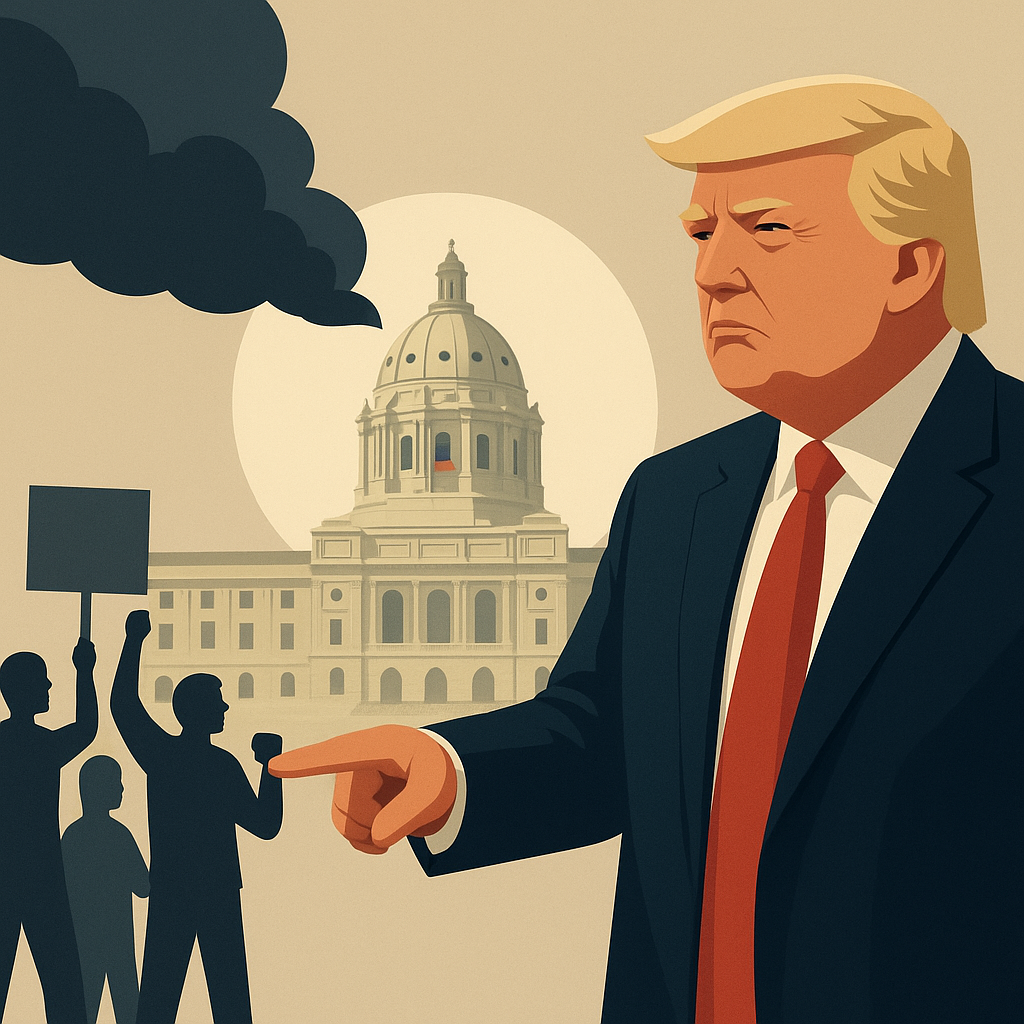
Protests against ICE in Minnesota have sparked tension, prompting Trump to consider invoking the Insurrection Act. This act allows for the deployment of military forces domestically, a rare and controversial move. Trump’s aim is to restore order in a landscape where local leaders struggle to manage mounting dissent over federal immigration policies. Rage over ICE operations amplifies the urgency, with protests reflecting broader community grievances.
Local officials, facing pressure to quell unrest while navigating public opinion, find themselves at a crossroads. The protests have garnered significant support, challenging traditional narratives around federal authority and local governance. As dissent grows, grassroots movements are reshaping conversations about ICE's role, complicating the local political landscape.
Insurrection Act: A Double-Edged Sword
Invoking the Insurrection Act, while potentially restoring order, poses significant risks. Critics warn it undermines local autonomy and raises fears of civil liberties violations. The act has a contentious history, often resulting in escalated tensions. Will local leaders galvanize public support to resist Trump’s threats or yield to federal intervention to quell unrest?
This scenario offers local officials a pivotal moment to negotiate with protesters, potentially leading to de-escalation. However, federal presence risks igniting further resistance, complicating efforts for a peaceful resolution. The political climate heightens scrutiny, with every decision under public and media lens.
Public Reaction: Signals of Civil Unrest
Public protests against ICE increasingly symbolize broader struggles for justice, representing marginalized communities’ calls for change. Trump’s potential invocation of the Insurrection Act could galvanize civil resistance, drawing in communities opposed to federal militarization on their streets. Heightened discourse on civil liberties unfolds across social media, advocating for dialogue over militaristic responses.
What it turns into (Top outcomes)
Trump threatens to use Insurrection Act in Minnesota: What it means
Understanding the Insurrection Act
explainer_siteWhy it works: Provides context and historical background on the Insurrection Act, helping audiences understand its implications.
Why now: breaking momentum · 48h window
- Research historical instances of the Insurrection Act
- Create a timeline of events leading to this threat
- Discuss implications with legal experts
Mobilizing Against Federal Overreach
movementWhy it works: Encourages grassroots organizing and activism in response to perceived threats to local governance.
Why now: breaking momentum · 48h window
- Organize community meetings
- Create social media campaigns
- Engage with local representatives
Protests and the Insurrection Act
video_trendWhy it works: Utilizes video content to capture public sentiment and reactions to the threat, potentially going viral.
Why it matters
In response to ongoing protests against ICE agents, Trump has signaled a willingness to utilize the Insurrection Act, an emergency power that allows him to deploy federal troops domestically. This development marks a significant escalation in federal-state dynamics and could redefine the parameters of local governance and civil liberties.
Scenarios
Best case
Local officials successfully negotiate a resolution with protesters, avoiding federal intervention and fostering community engagement.
Base case
Protests continue with heightened tensions, leading to limited federal involvement but sustained conflict.
Worst case
Trump invokes the Insurrection Act, resulting in widespread chaos and military presence in Minnesota, escalating national unrest.
What to watch next
- Official responses from Minnesota state leaders regarding Trump's threat.
- Any announcements from federal law enforcement about mobilization in response to protests.
- Social media reactions and grassroots mobilizations related to the protests.
Confidence & momentum
Confidence reflects data quality. Momentum tracks acceleration versus baseline.
Sources
Related signals


Top 3 plays
Creator & Founder Playbook
Play 1
Create an Informative Video
Visual content can effectively communicate the seriousness of the situation and engage viewers.
Next steps
- Gather footage of protests
- Interview experts on the Insurrection Act
- Edit and publish on social media
Professional copy
Play 2
Host a Community Forum
Bringing people together can foster dialogue and collective action.
Next steps
- Find a venue
- Invite local leaders and experts
- Promote the event on social media
Professional copy
Play 3
Write an Op-Ed
Op-eds can influence public opinion and inform readers about the issue.
Next steps
- Draft the op-ed
- Submit to local publications
- Share on social media
Professional copy
For Journalists
Trump Threatens to Invoke Insurrection Act in Minnesota
Local officials face potential federal intervention amid protests against ICE agents
One-line summary
Former President Trump has warned that he may invoke the Insurrection Act in Minnesota if protests against ICE agents continue to escalate.
Background
The Insurrection Act allows the President to deploy military forces domestically to address civil disorder, typically invoked in situations of large-scale unrest.
What changed
Trump's statement represents a significant escalation in rhetoric regarding federal involvement in local protests.
Why it matters
This development raises questions about federal-state relations and the scope of presidential powers in managing domestic unrest.
Story angles
- Implications for federal versus state authority
- Historical context of the Insurrection Act
- Potential impact on public safety and civil liberties
Questions to ask
- What are the legal implications of invoking the Insurrection Act?
- How have local officials responded to Trump's threat?
- What precedents exist for using the Insurrection Act in similar situations?
Sources to check
- Al Jazeera
For Creators
Big Idea
Trump's potential invocation of the Insurrection Act in Minnesota raises critical questions about federal power and local autonomy.
Hook: What does Trump's threat to invoke the Insurrection Act really mean for Minnesota and beyond?
Short-form concepts
- Explaining the Insurrection Act
- Local vs. federal authority
- Impact of protests on government action
- Historical context of the Insurrection Act
Titles
- Trump's Insurrection Act Threat: What You Need to Know
- Minnesota on Edge: Trump's Federal Intervention Warning
- Unpacking Trump's Insurrection Act Threat in Minnesota
Opening hooks
- What happens when a former president threatens federal intervention?
- Can Trump really execute his threats in Minnesota?
- As protests escalate, Trump raises the stakes with the Insurrection Act.
30s narration
In Minnesota, Trump has threatened to invoke the Insurrection Act if local officials fail to control ongoing protests against ICE agents. This bold move raises significant concerns about federal overreach and the delicate balance of power between state and federal authorities. What does this mean for residents and protesters alike?
60s narration
The Insurrection Act is an extraordinary measure that allows a president to deploy military forces to restore order during civil unrest. Trump’s recent threat in Minnesota suggests he may resort to this act if local officials are unable to manage protests against ICE agents. This situation not only intensifies the ongoing debates about federal power but also poses serious implications for civil liberties and community responses to federal intervention. Understanding the historical context and the possible consequences of such actions is crucial as this story unfolds.
Stay Ahead of the Curve.
Signal-based insights delivered before they hit mainstream.