Key points
- Understanding the Louisiana Coastal Lawsuits
- The Impact of Oil Companies on Louisiana's Coast
- Legal Battles: Oil Companies vs. Louisiana
Writers’ Room
Supreme Court's Tug-of-War Over Louisiana Oil Lawsuits: A Collision of Interests
What this signals next — By K.O. Kid
Case Transfer Debate: Power Dynamics in the Courtroom
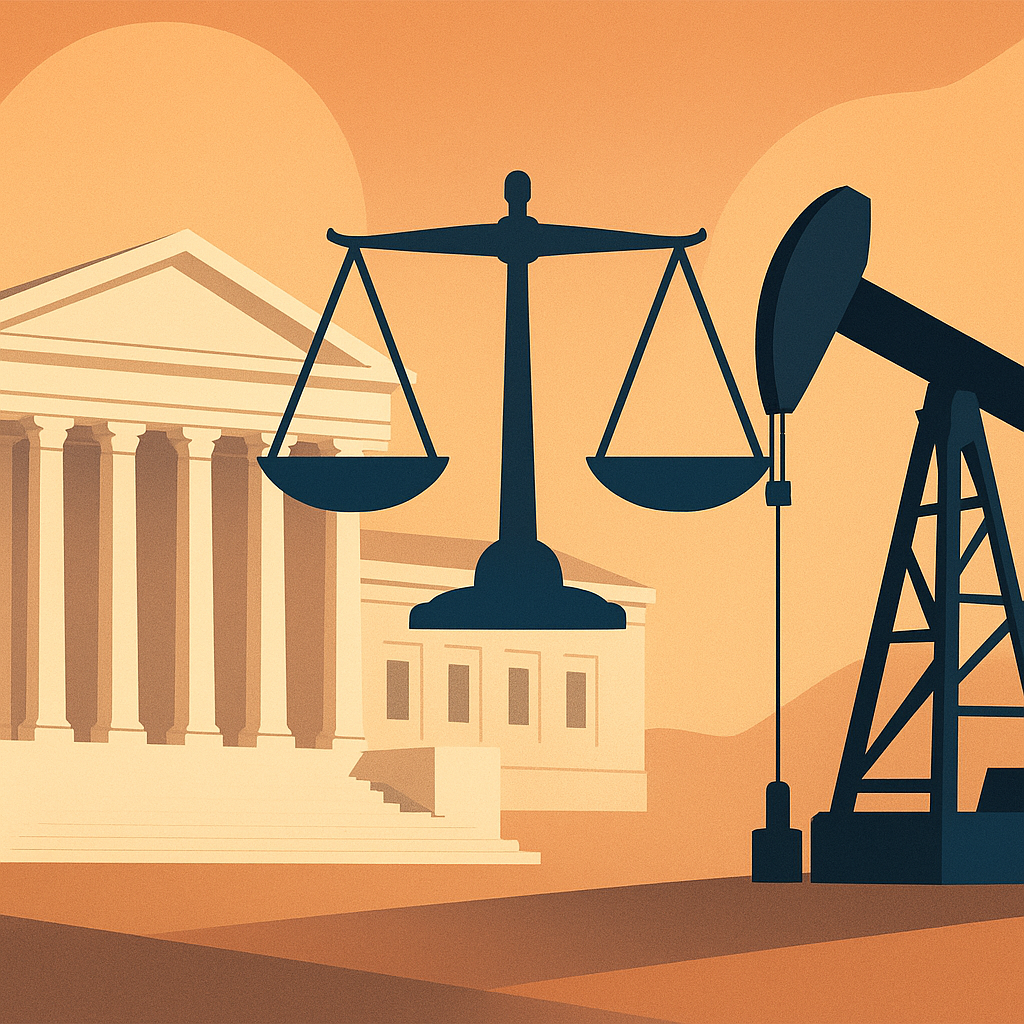
The Supreme Court is deliberating case transfers of Louisiana's coastal lawsuits against oil companies, a critical juncture that reshapes corporate liability. Louisiana seeks to keep these cases in state court, emphasizing accountability for environmental degradation linked to oil industry activities. Oil companies, however, argue for a shift to federal jurisdiction, which they see as more favorable.
This unfolding drama not only presents a question of jurisdiction but reveals the intricate power dynamics at play. Historically, Louisiana’s coastal erosion, exacerbated by oil extraction, has devastated local ecosystems. The justices must navigate precedents, public sentiment, and the legal implications of siding with either state accountability or corporate interests.
Jurisdiction Preference: The Stakes of Environmental Integrity
The ongoing Supreme Court hearings represent a pivotal moment for environmental preservation, underscoring the stakes involved. With Louisiana's lawsuits aiming to hold oil companies accountable for coastal damage, the argument transcends financial aspects—it speaks to the broader implications of evading responsibility by shifting forums.
Success for oil companies could set a dangerous precedent, enabling them to sidestep local accountability. If the Supreme Court leans toward federal jurisdiction, it risks shifting more power to federal courts, historically seen as favoring corporate interests over local communities' environmental welfare.
Significance of the Ongoing Hearings: Future Implications
January 2026 is set to be a defining moment for corporate liability cases across the nation. The current Supreme Court hearings are not just about Louisiana; their outcomes could influence the legal landscape significantly. This situation exemplifies the ongoing struggle between corporate power and state rights to enforce environmental laws.
What it turns into (Top outcomes)
Supreme Court Grapples With Louisiana Coastal Lawsuits Against Oil Companies
Understanding the Louisiana Coastal Lawsuits
explainer_siteWhy it works: Provides context and background on the lawsuits and their implications for environmental policy.
Why now: breaking momentum · 48h window
- Research the history of coastal lawsuits
- Analyze previous similar cases
- Create a timeline of events
The Impact of Oil Companies on Louisiana's Coast
video_trendWhy it works: Engages viewers with visual storytelling about the environmental impact of oil companies in Louisiana.
Why now: breaking momentum · 48h window
- Gather footage of affected areas
- Interview local activists
- Highlight key statistics
Legal Battles: Oil Companies vs. Louisiana
newsletterWhy it works: Keeps subscribers informed about ongoing legal issues and their implications for the environment.
Why it matters
As legal battles intensify over the environmental degradation of Louisiana's coast, oil companies are seeking to move litigation to federal court, where they traditionally anticipate a more favorable outcome. The Supreme Court's decision will set a significant precedent regarding corporate legal strategy and environmental accountability.
Scenarios
Best case
The Supreme Court rules to keep the cases in state court, thereby fortifying states' rights in environmental matters and ensuring that oil companies are held accountable at a local level.
Base case
The Supreme Court allows oil companies to transfer the cases to federal court, leading to a lengthy legal battle with uncertain outcomes for environmental protections.
Worst case
The ruling results in a broad precedent enabling corporations to consistently circumvent state courts, significantly undermining local efforts to address environmental degradation.
What to watch next
- Reactions from environmental advocacy groups regarding the oral arguments presented.
- Responses from the oil industry on the potential implications of a Supreme Court ruling.
- Further insights or amicus briefs submitted by stakeholders or other states.
Confidence & momentum
Confidence reflects data quality. Momentum tracks acceleration versus baseline.
Sources
Related signals


Top 3 plays
Creator & Founder Playbook
Play 1
Create an Informative Video
With the Supreme Court's deliberation, there is a heightened interest in the topic.
Next steps
- Research the background of the lawsuits
- Interview experts on the implications
- Edit and publish the video
Professional copy
Play 2
Host a Webinar on Environmental Law
The ongoing legal debates present an opportunity for education and engagement.
Next steps
- Invite legal experts to speak
- Promote the event on social media
- Record and share the session
Professional copy
Play 3
Write a Comprehensive Blog Post
As public interest grows, detailed analysis can attract readers.
Next steps
- Outline the key points of the case
- Include expert opinions and data
- Publish and promote the post
Professional copy
For Journalists
Supreme Court Considers Louisiana Coastal Lawsuits Against Oil Companies
Debate centers on jurisdictional transfer from state to federal court.
One-line summary
The Supreme Court is weighing whether oil companies can move lawsuits from Louisiana state courts, where they face environmental claims, to the perceived more favorable federal court system.
Background
Louisiana has filed lawsuits against several oil companies, alleging environmental damage to its coastal areas, and the outcome of these cases could significantly impact both the state's environment and the oil industry.
What changed
The Supreme Court's deliberation marks a pivotal moment in determining the jurisdictional authority over these high-profile environmental lawsuits.
Why it matters
The decision could set a precedent for how environmental lawsuits are handled in the U.S., potentially affecting corporate accountability and state rights in environmental matters.
Story angles
- Impact on Louisiana's coastal environment
- Legal implications for future environmental lawsuits
- Potential influence on corporate litigation strategies
Questions to ask
- How might this ruling affect similar cases in other states?
- What are the implications for state sovereignty in environmental regulation?
- What arguments are being presented by both sides in the Supreme Court?
Sources to check
- NYT Politics: https://www.nytimes.com/2026/01/12/us/politics/supreme-court-louisiana-oil.html
For Creators
Big Idea
The Supreme Court's decision could reshape corporate accountability regarding environmental lawsuits.
Hook: Will the Supreme Court favor big oil or protect Louisiana's coastal communities?
Short-form concepts
- Explaining the implications of the Supreme Court's decision
- Highlighting Louisiana's environmental struggles
- Comparing state vs. federal court advantages for corporations
- Profile of affected Louisiana communities
- Interview snippets with legal experts on the case
Titles
- Supreme Showdown: Oil Companies vs. Louisiana's Coast
- Louisiana Lawsuits: State vs. Federal Court Dilemma
- The Court's Role in Coastal Protection
- What’s at Stake for Louisiana in the Oil Lawsuits?
Opening hooks
- The fate of Louisiana's coast hangs in the balance.
- Big oil companies want out—here's why that matters.
- What happens when environmental justice meets corporate power?
- In a battle for Louisiana's future, the Supreme Court takes center stage.
30s narration
In a pivotal case, the Supreme Court is deciding whether oil companies can shift lawsuits from Louisiana courts, known for their environmental focus, to federal courts, often seen as pro-business. This decision could drastically impact local communities fighting to protect their coastlines from the oil industry's pollution and erosion. Stay tuned as we dive deeper into what this means for the future of Louisiana.
60s narration
Stay Ahead of the Curve.
Signal-based insights delivered before they hit mainstream.


