Key points
- Support for Democratic Change in Iran
- Understanding the Legacy of the Shah
- Documentary Series on Iran's Political History
Writers’ Room
Reza Pahlavi and the Fragile Stage of Iranian Protests: A Legacy in Limbo
What this signals next — By Velvet Crash
Reza Pahlavi's Exile and Aspirations for Leadership
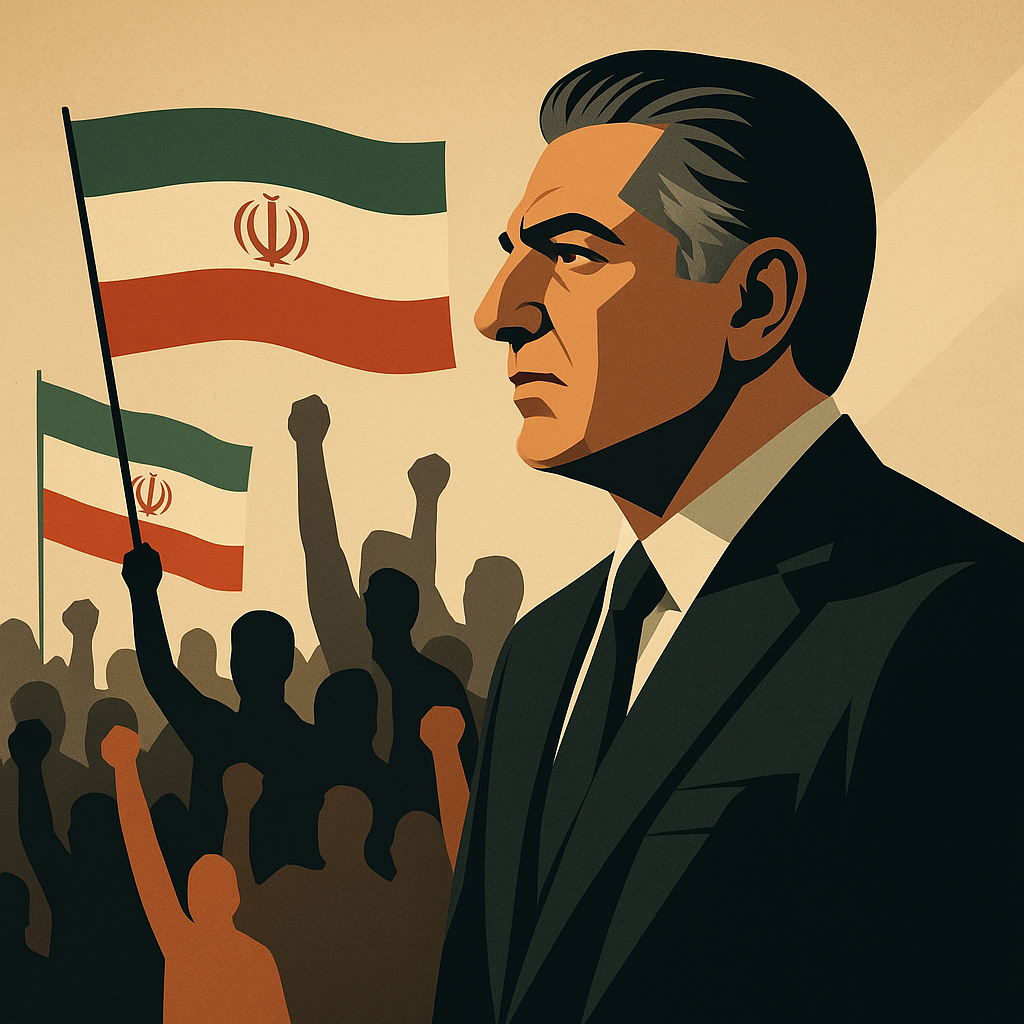
Reza Pahlavi, living in the United States, grapples with a desire to reclaim the leadership his father once held. This internal struggle unfolds against the backdrop of ongoing Iranian protests fueled by deep-seated social and economic grievances. As he maneuvers within this complex environment, he must confront a public acutely aware of his father's heavy legacy of repression, which colors perceptions of his leadership potential.
His efforts to present himself as a unifying figure amid the chaos of protests are met with skepticism. The Iranian public seeks leaders rooted in authenticity, not merely symbols of the past. Pahlavi’s desire for legitimacy faces the challenging reality that past betrayals have created a lack of trust among citizens, complicating his quest for acceptance in a landscape marked by discontent.
Ongoing Iranian Protests as Catalysts for Change
The ongoing protests in Iran represent a revolutionary wave, fueled by a population yearning for democracy and genuine reform. These mass mobilizations are not just cries for change but a rejection of historical authoritarian dynamics. As Pahlavi navigates this charged environment, he risks being overshadowed by both the protests' grassroots leadership and the pressing demand for authentic change beyond a monarchical revival.
Protesters demonstrate civil disobedience as a powerful form of resistance, forging a collective vision that challenges the repressive legacy of the Shah's regime. The protests consolidate power across various factions, demanding more than what any singular leader can provide. Pahlavi's positioning, while embodying hope for some, must resonate with the broader aspirations for liberty and justice prevalent among demonstrators.
Pahlavi's Positioning Against Public Sentiment
In his bid to emerge as a leader, Pahlavi must traverse a landscape scarred by historical trauma and mistrust. Every step he takes is scrutinized by a public that remembers the past. He attempts to leverage international support, tapping into his connections within the Iranian diaspora, while facing the challenge of aligning his narrative with the protesters' immediate needs. The question remains: can he demonstrate genuine empathy for their plight amidst efforts to secure legitimacy?
What it turns into (Top outcomes)
Son of Deposed Shah of Iran Seeks Center Stage Amid Protests
Support for Democratic Change in Iran
movementWhy it works: The ongoing protests create a ripe environment for movements advocating for democratic reforms, potentially rallying support around Pahlavi's leadership.
Why now: breaking momentum · 48h window
- Create a petition for democratic reforms
- Organize virtual town halls discussing the future of Iran
- Launch a social media campaign to raise awareness
Understanding the Legacy of the Shah
explainer_siteWhy it works: An explainer site can provide context on the historical significance of the Shah's regime and its impact on current events, helping audiences understand the complexities of the situation.
Why now: breaking momentum · 48h window
- Research historical events related to the Shah
- Develop engaging content for the site
- Promote the site through social media channels
Documentary Series on Iran's Political History
Why it matters
Living in exile in the United States, Pahlavi is increasingly vocal and visible, seeking to capitalize on the public discontent and unrest that has emerged against the Iranian regime. He positions himself as a unifying figure who can guide Iran towards a new democratic era, although he carries the weight of his father's controversial legacy, which is marked by authoritarianism.
Scenarios
Best case
Pahlavi successfully galvanizes diverse opposition forces, leading to a coordinated push for democratic reform and a peaceful transition of power.
Base case
Pahlavi gains traction as a symbolic leader of the protests, increasing international support but facing challenges in unifying various factions.
Worst case
The Iranian regime escalates its crackdown on protests and opposition leaders, including Pahlavi, stifling dissent and prolonging instability.
What to watch next
- Statements or endorsements from prominent Iranian activists regarding Pahlavi's role.
- International reactions from Western nations, particularly regarding potential support for opposition figures.
- Social media responses from within Iran reflecting public sentiment about Pahlavi.
Confidence & momentum
Confidence reflects data quality. Momentum tracks acceleration versus baseline.
Sources
Related signals


Top 3 plays
Creator & Founder Playbook
Play 1
Launch a Movement for Democratic Change
The current protests provide a unique opportunity to galvanize support for democratic reforms in Iran.
Next steps
- Create a campaign strategy
- Engage with activists and influencers
- Utilize social media for outreach
Professional copy
Play 2
Create an Explainer Site on Iran's Political History
Providing context on Iran's political history will help audiences understand the current situation better.
Next steps
- Research key historical events
- Develop engaging content
- Promote the site
Professional copy
Play 3
Produce a Documentary Series on Iran
A documentary series can visually narrate Iran's complex political history, attracting a broad audience.
Next steps
- Gather archival footage
- Plan episode content
- Engage with viewers
Professional copy
Personas & angles
For Journalists
Son of Deposed Shah of Iran Seeks Center Stage Amid Protests
Reza Pahlavi positions himself as a potential leader while living in exile in the U.S.
One-line summary
Reza Pahlavi, son of Iran's last Shah, aims to establish himself as a key figure during the ongoing protests against the Iranian regime.
Background
Reza Pahlavi has spent decades in exile following the 1979 Iranian Revolution, advocating for political change in Iran while grappling with his father's legacy.
What changed
Pahlavi's renewed focus on leadership comes as protests surge in Iran, reflecting public discontent with the current regime.
Why it matters
The dynamics of Iranian leadership could shift significantly if Pahlavi gains traction among protestors, impacting U.S.-Iran relations and broader regional stability.
Story angles
- The historical context of the Pahlavi dynasty in Iran
- Public perception of Pahlavi and his viability as a leader
- The role of expatriate voices in Iran's political future
Questions to ask
- What support does Pahlavi have within Iran?
- How are the protests influencing the discourse surrounding leadership?
- What are the implications of Pahlavi's involvement for domestic and international politics?
Sources to check
- NYT World
For Creators
Big Idea
Reza Pahlavi aims to capitalize on protests to reclaim his family's legacy in Iran.
Hook: Can the son of the deposed Shah transform Iran's protests into a pathway for leadership?
Short-form concepts
- Reza's journey from exile to potential leader.
- Legacy of the Shah: A double-edged sword.
- Voices of the protesters: What do they want?
- Can a royal figure unite a divided nation?
Titles
- The Comeback of Reza Pahlavi?
- Reza Pahlavi: Leader or Legacy?
- Protests in Iran: A Royal Rebirth?
- From Exile to Leadership: The Pahlavi Path
Opening hooks
- In the heart of protests, one figure is rising from the shadows.
- Is Iran ready to welcome back the legacy of its past?
- Could the son of a deposed monarch be the key to Iran's future?
- As the streets roar, a royal name emerges.
30s narration
Reza Pahlavi, son of Iran's last Shah, is stepping up as protests grip the nation. Living in exile, he’s long envisioned himself as a future leader. But can he overcome the heavy burden of his father's legacy to win the hearts of a people tired of oppression?
60s narration
Amidst ongoing protests in Iran, Reza Pahlavi, the son of the deposed Shah, is trying to carve out a leadership role. From his life in exile in the United States, he’s been positioning himself as a beacon of hope for many. But can he genuinely resonate with Iranians, given the oppressive history of his father's regime? As he navigates this complex legacy, the question remains: Is he the leader Iran needs, or just a symbol of a past that many want to forget?
Stay Ahead of the Curve.
Signal-based insights delivered before they hit mainstream.


