Key points
- Advocacy for Rohingya Rights
- Understanding the Rohingya Genocide
Writers’ Room
The Gambia's Bold Legal Stance Against Myanmar: A Case Study in Accountability
What this signals next — By Dr. Null
The Gambia's Action at the ICJ
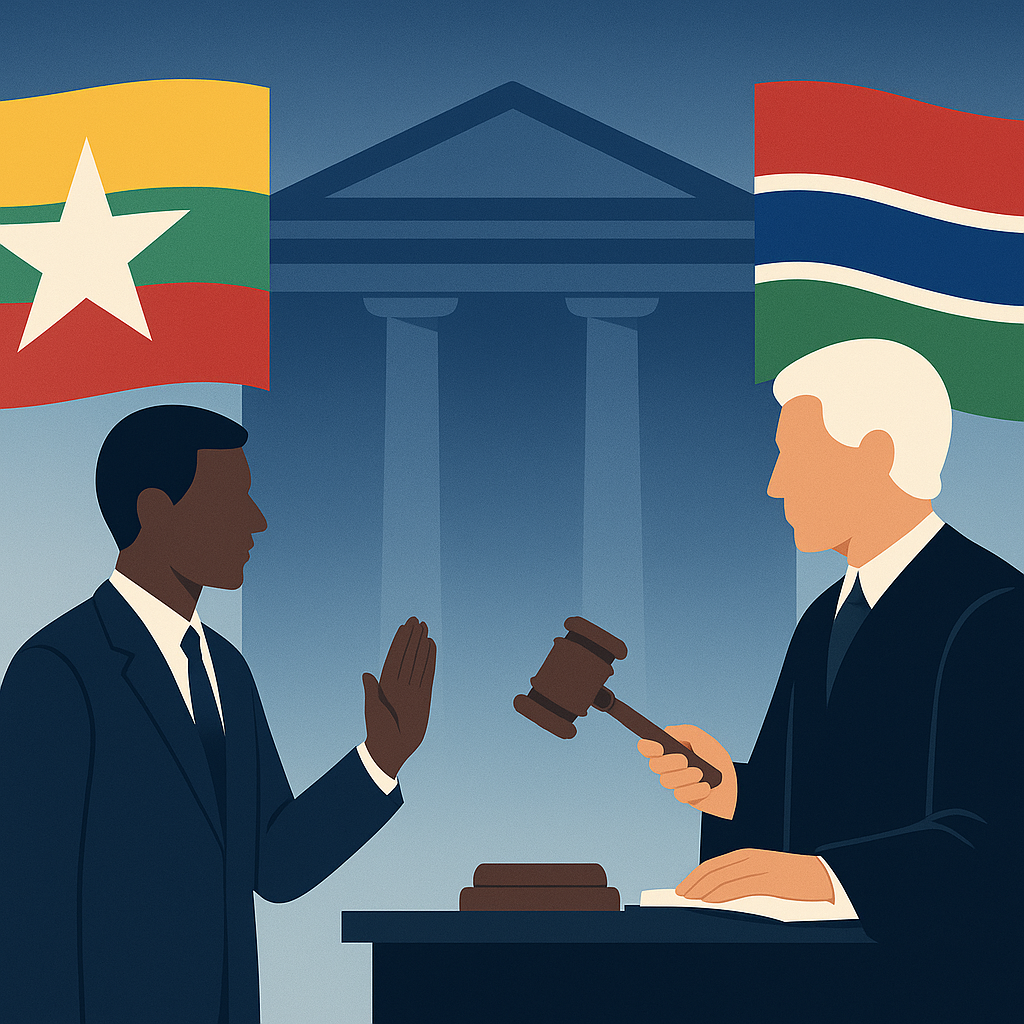
In 2019, The Gambia became the first country to bring Myanmar to the International Court of Justice (ICJ), accusing it of genocide against the Rohingya people. This landmark case seeks to spotlight the plight of approximately 1.1 million Rohingya in exile, emphasizing their severe persecution and violence within Myanmar. The Gambia's approach as a third-party rights defender reflects a commitment to international human rights standards despite its limited resources, aiming to galvanize broader support and attention.
The ICJ's ruling in January 2020 mandated Myanmar to take preventive measures against genocide, marking a critical moment in international accountability. The Gambia's legal actions serve not only as a challenge to Myanmar but also as leverage to draw global attention to the Rohingya crisis.
Myanmar's Defense Against Allegations
Myanmar's defense strategy in this legal dispute hinges on discrediting the allegations while striving to maintain its international standing. The state faces heightened scrutiny following the ICJ’s January 2020 order for preventive measures against genocide, further complicating its diplomatic relationships and domestic narrative.
Amid intense pressure from NGOs and international bodies, Myanmar's government must balance claims of sovereignty with accountability demands. If it successfully counters the allegations, the country could mitigate economic and diplomatic repercussions. Failure to do so risks further alienation in global politics.
The International Community's Role
The international community plays a crucial role in this legal battle, as the ICJ serves as a platform for upholding human rights and addressing violations. Major actors are expected to assess their commitments to justice for the Rohingya, recognizing the significance of The Gambia's efforts in setting a legal precedent.
What it turns into (Top outcomes)
Why The Gambia wants Myanmar punished for Rohingya genocide
Advocacy for Rohingya Rights
movementWhy it works: Mobilizes public support and awareness around the Rohingya crisis.
Why now: breaking momentum · 48h window
- Create a petition for international support
- Organize awareness campaigns
- Engage with NGOs for collaboration
Understanding the Rohingya Genocide
explainer_siteWhy it works: Provides detailed information and context about the situation, helping to educate the public.
Why now: breaking momentum · 48h window
- Develop a comprehensive guide
- Include survivor stories
- Link to legal resources
Why it matters
As the first nation to act as a third-party rights defender, The Gambia aims to hold Myanmar accountable for alleged genocidal actions against the Rohingya people, potentially setting a precedent for future international legal interventions.
Scenarios
Best case
The ICJ rules against Myanmar, leading to accountability and reparations for the Rohingya, catalyzing a global movement for justice.
Base case
The case proceeds, garnering international attention and sparking debates about genocide prevention without a definitive ruling in the short term.
Worst case
The ICJ dismisses the case, emboldening Myanmar and other nations to violate human rights without fear of repercussion.
What to watch next
- Reactions from the Myanmar government regarding the court's proceedings.
- Statements from international human rights organizations on the implications of The Gambia's actions.
- Media coverage and public discourse surrounding the case as it unfolds.
Confidence & momentum
Confidence reflects data quality. Momentum tracks acceleration versus baseline.
Sources
Related signals


Top 3 plays
Creator & Founder Playbook
Play 1
Create a Viral Campaign
The Gambia's actions can galvanize support for the Rohingya cause.
Next steps
- Develop shareable content
- Engage influencers
- Use hashtags strategically
Professional copy
Play 2
Host a Webinar
Educating the public on the implications of this case can drive engagement.
Next steps
- Invite experts
- Promote on social media
- Record and share the session
Professional copy
Play 3
Develop Educational Resources
Providing resources can empower individuals to advocate for change.
Next steps
- Create infographics
- Develop a resource hub
- Collaborate with educational institutions
Professional copy
For Journalists
The Gambia Seeks Justice for Rohingya at ICJ
First nation to take Myanmar to International Court for alleged genocide
One-line summary
The Gambia has filed a case against Myanmar in the International Court of Justice, alleging genocide against the Rohingya people.
Background
The Rohingya, a Muslim minority in Myanmar, have faced severe persecution, leading to mass displacement and allegations of genocide, prompting international condemnation and legal actions.
What changed
The Gambia's legal action marks the first instance of one nation bringing another before the ICJ as a representative of third-party rights regarding genocide.
Why it matters
This development underscores an increasing commitment by some nations to hold countries accountable for human rights violations and could impact future international legal precedents.
Story angles
- Implications for international law and accountability
- Responses from Myanmar and the global community
- Historical context of the Rohingya situation
Questions to ask
- What evidence is The Gambia presenting in its case?
- How will this action affect Myanmar's international relations?
- What are the potential legal and political consequences of this case?
Sources to check
- Al Jazeera: Why The Gambia wants Myanmar punished for Rohingya genocide
For Creators
Big Idea
The Gambia takes a bold stand for justice by holding Myanmar accountable for the Rohingya genocide at the International Court of Justice.
Hook: Discover how The Gambia is stepping into the spotlight as the first nation to challenge Myanmar over the Rohingya crisis.
Short-form concepts
- Gambia's legal action explained
- Impact of international law on genocide
- Voices of the Rohingya: Why justice matters
- Global response to The Gambia's initiative
Titles
- Gambia vs. Myanmar: A Fight for Justice
- Rohingya Genocide: The Gambia Takes Action
- The Gambia's Legal Battle Against Myanmar
Opening hooks
- What happens when a small nation takes on a bigger power?
- A groundbreaking move in the fight against genocide!
- Why is The Gambia standing up for the Rohingya?
30s narration
The Gambia is making headlines by becoming the first country to bring Myanmar to the International Court of Justice, demanding accountability for the Rohingya genocide. This historic action highlights the importance of international justice and the role of smaller nations in confronting larger, more powerful states. Stay tuned to learn more about this pivotal moment.
60s narration
In a groundbreaking decision, The Gambia has emerged as a key player in international law by holding Myanmar accountable for the alleged genocide against the Rohingya people. By bringing this case to the International Court of Justice, The Gambia not only advocates for justice but also sets a precedent for other nations. This is about more than just legal action; it's about giving a voice to the Rohingya and ensuring that such atrocities are recognized and punished on a global scale. Stay with us as we delve into the implications of this audacious move.
Stay Ahead of the Curve.
Signal-based insights delivered before they hit mainstream.


