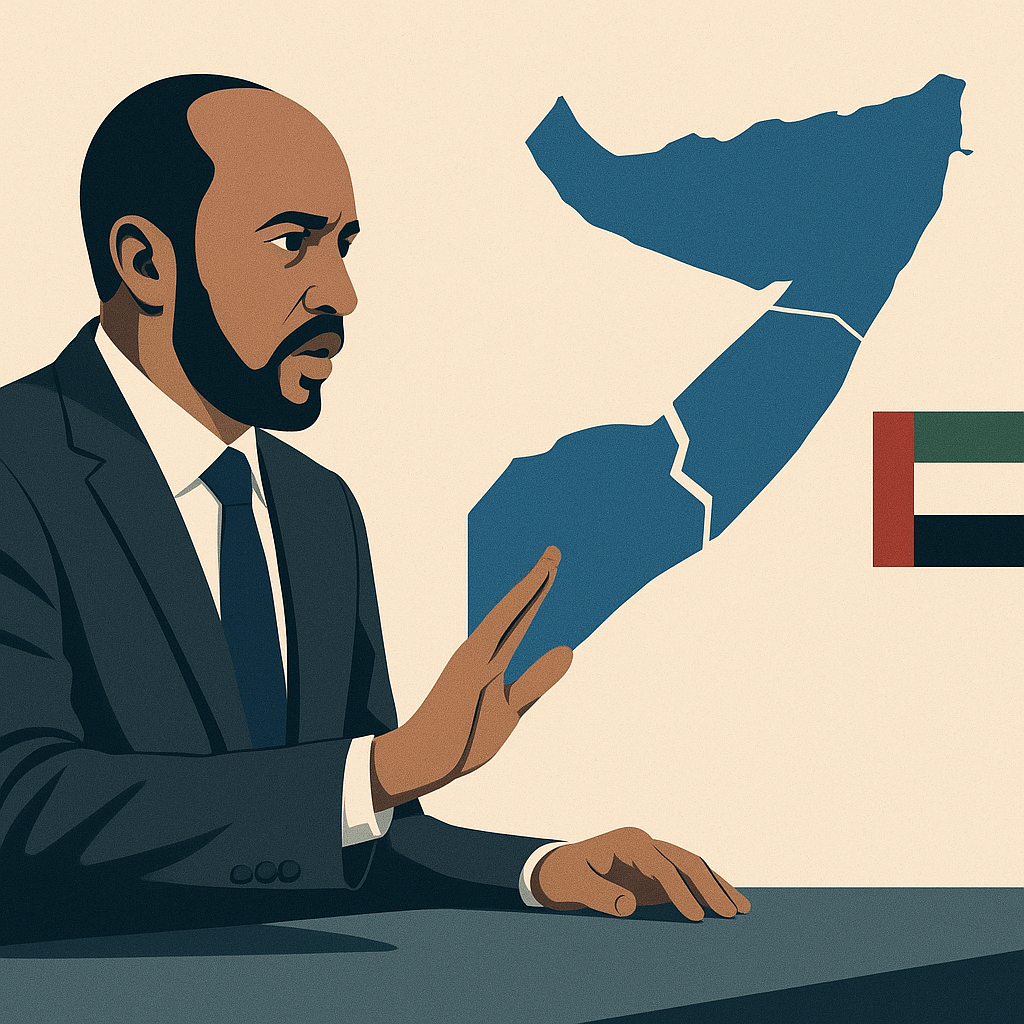
Key points
- Understanding Somalia's Fragmentation
- The Role of Foreign Influence in Somalia
- Advocacy for Somali Unity
Writers’ Room
UAE's Influence: A Catalyst for Somalia's Fragmentation
What this signals next — By Mara Quarterly
UAE Involvement Fuels Fragmentation Discourse
On January 14, 2026, Somalia’s Minister of State for Foreign Affairs directly accused the UAE, stating its support significantly contributes to Somalia's fragmentation. The UAE has been involved in Somalia since 2012, supplying military assistance and economic aid, which many local factions interpret as interference rather than support. This multifaceted involvement raises questions about the UAE's intentions: is it genuinely aiding Somalia or exacerbating preexisting fractures?
The Minister's comments reflect a broader sentiment among local actors who feel that the UAE's presence complicates national unity amidst growing separatist movements. As different factions elevate grievances, the line between support and manipulation blurs, leading to a perception that the UAE's actions infringe upon Somalia’s sovereignty and autonomy.
Separatist Divisions Intensified by UAE Support
The Minister's assertion that UAE involvement increases separatist divisions within Somalia aligns with concerns regarding the nation’s geopolitical stability. Local factions, viewing the UAE's military and economic support as tools of fragmentation, are navigating a landscape fraught with shifting loyalties. This manipulation theory underscores how foreign influences, such as that of the UAE, can empower specific groups over others, thereby undermining national cohesion.
The Somali government faces a delicate balancing act: it needs foreign support while combating rising separatist sentiments. Recognizing the complexities of UAE economic and military backing is essential for forming an effective strategy against separatist movements, particularly as these internal divisions threaten Somalia’s long-term stability.
Contextualizing Internal Strife and UAE's Role
Somalia's internal conflicts, dating back decades, intersect with the UAE's evolving role in the region. Since 2012, the UAE's involvement has often been linked to destabilizing factors within Somalia, challenging its narrative as a peacekeeper. Some factions perceive UAE support as a double-edged sword, seeking to exploit it for political gain while others fear it aggravates分 fragmentation.
What it turns into (Top outcomes)
Somali minister blames UAE support for ‘fragmentation’ of Somalia
Understanding Somalia's Fragmentation
explainer_siteWhy it works: Provides context on the historical and political factors contributing to Somalia's divisions.
Why now: breaking momentum · 48h window
- Research the history of Somalia's political landscape
- Create a timeline of events leading to current tensions
- Interview experts on Somali politics
The Role of Foreign Influence in Somalia
video_trendWhy it works: Engages viewers with visual storytelling about the impact of foreign nations on Somalia's stability.
Why now: breaking momentum · 48h window
- Gather footage of Somalia's regions
- Create an animated infographic
- Interview local journalists
Advocacy for Somali Unity
movementWhy it works: Mobilizes support for initiatives aimed at fostering unity and addressing foreign influence.
Why it matters
The Minister's remarks highlight a growing concern among Somali officials regarding international influences, particularly from the United Arab Emirates, which are perceived to be undermining national unity and stability. This statement reflects ongoing geopolitical tensions and raises questions about the future of Somalia's sovereignty in the face of foreign support that may enable further divisiveness.
Scenarios
Best case
A diplomatic resolution is reached with the UAE, leading to greater stability and collaborative efforts that strengthen Somalia’s unity.
Base case
The political landscape remains highly fragmented, with evolving external influences continuing to complicate Somalia's path to cohesion.
Worst case
Escalation of separatist movements fueled by foreign support leads to conflict and further disintegration of state authority in Somalia.
What to watch next
- Reactions from the UAE government regarding the Somali minister's allegations.
- Statements from other Somali political leaders and factions on the issue of foreign support.
- Developments in local protests or political rallies that might arise in response to the minister's claims.
Confidence & momentum
Confidence reflects data quality. Momentum tracks acceleration versus baseline.
Sources
Related signals


Top 3 plays
Creator & Founder Playbook
Play 1
Create an Explainer Video
With rising tensions in Somalia, an explainer video can help viewers understand the complexities of the situation.
Next steps
- Research key facts and figures
- Script the video content
- Gather visuals and edit the video
Professional copy
Play 2
Launch a Social Media Campaign
There is a growing interest in Somalia's political issues, making it a prime time to advocate for unity.
Next steps
- Develop campaign messaging
- Create engaging graphics and videos
- Identify key influencers to collaborate with
Professional copy
Play 3
Host a Community Discussion
Engaging local communities can foster dialogue about the impact of foreign influence.
Next steps
- Organize a venue and date
- Invite speakers and experts
- Promote the event through local channels
Professional copy
Personas & angles
For Journalists
Somali Minister Blames UAE Support for National Fragmentation
Claims external backing exacerbates separatist tensions in Somalia
One-line summary
Somalia's Foreign Affairs Minister has attributed the country's fragmentation to external influences, notably from the UAE.
Background
Somalia has faced prolonged instability and civil conflict, leading to divisions among various regions and clans. The role of foreign powers in the country's internal politics remains contentious.
What changed
The Minister's remarks highlight a growing concern regarding foreign influence in Somalia's political landscape and its impact on national unity.
Why it matters
The implications of foreign support will affect not only Somalia's stability but also the geopolitical dynamics in the Horn of Africa.
Story angles
- Analysis of UAE's role in Somali politics.
- Impact of foreign influence on national conflicts.
- Reactions from international community and other stakeholders.
Questions to ask
- What specific actions from the UAE are contributing to these tensions?
- How does the Somali government plan to address foreign influence?
- What are the perspectives of various Somali regional leaders on this issue?
Sources to check
- Al Jazeera
For Creators
Big Idea
Examining the impact of foreign influence on Somalia's unity.
Hook: Is the UAE's involvement unraveling Somalia's fragile fabric?
Short-form concepts
- A deep dive into Somalia's complex dynamics.
- The role of foreign aid in national politics.
- Separatism and international relations: a case study.
- What happens when support becomes interference?
- Voices from Somalia: the perspective on external influence.
Titles
- External Influences: The UAE and Somalia's Fragmentation
- Is UAE Support Driving Somalia Apart?
- Somali Minister Accuses UAE of Fueling Division
- The Unexpected Consequences of UAE's Support in Somalia
Opening hooks
- What if the aid you receive is tearing your country apart?
- In a nation struggling for unity, foreign support can be a double-edged sword.
- When help turns harmful: Somalia's plight under foreign eyes.
- Is Somalia's future in jeopardy due to external influence?
30s narration
Somalia's Minister of State for Foreign Affairs claims that the UAE's support is fostering fragmentation and separatist tensions in the country. This raises a crucial question: how does foreign aid impact national stability? As Somalia grapples with its identity, the role of international players becomes ever more significant. What does this mean for the future of a united Somalia?
60s narration
Somalia's political landscape is under scrutiny as the Minister of State for Foreign Affairs points fingers at the UAE, attributing the nation's fragmentation and rising separatist divisions to their external support. While international aid is often seen as beneficial, in this case, it raises alarms about unintended consequences. Is the UAE's involvement helping or hurting Somalia's quest for unity? As the country navigates internal challenges, understanding the dynamics of foreign influence becomes crucial for its future. Will Somalia emerge stronger, or will growing divisions lead to further instability?
Stay Ahead of the Curve.
Signal-based insights delivered before they hit mainstream.